
Park Hill Neighborhood Guide11.04.2026

Thinking of calling Park Hill home? Great idea! I've collected some of the details you'll want to know before moving to [...]
 There’s a new name floating around Denver real estate conversations this fall: CoCo. It’s not a coffee shop or a new listing — it’s the Colorado Connector, the intercity passenger train set to link Fort Collins to Pueblo, with Denver Union Station right at the center. First trains are expected by 2029, and I’ve been fielding enough questions from clients about what this actually means that it seemed worth a proper rundown.
CoCo isn’t light rail or a commuter train — it’s built for longer trips along the I-25 corridor, with the kind of amenities you’d expect from an intercity train: wider seats, luggage space, bike storage, and food service. Think less “hop on for two stops” and more “work or relax while someone else handles I-25 traffic.” Amtrak is the planned operator, running on tracks owned by BNSF Railway north of Denver (under a 25-year access agreement) and Union Pacific south of Denver. The project is run by the Front Range Passenger Rail District, in partnership with RTD and CDOT.
The full corridor runs 190 miles and will eventually connect 12 stations:
•Fort Collins, Loveland, Longmont, Boulder, Louisville, Broomfield, Westminster
•Denver Union Station — the hub
•Littleton, Sterling Ranch, Colorado Springs, Pueblo
•Trinidad, where new infrastructure will also support Amtrak’s Southwest Chief route
Starter service begins in 2029 with three daily round trips between Fort Collins and Denver across eight stations — no new tax required, since that phase is funded through existing state and RTD commitments. Full build-out to Colorado Springs and Pueblo depends on a ballot measure this November: a 0.333% sales tax (a third of a penny per dollar) in the communities with planned stations, projected to generate about $1.5 billion over 25 years for infrastructure like parking and last-mile connections. If that measure doesn’t pass, starter service still runs on schedule — the southern leg just waits longer.
The name itself came from a public vote — nearly 26,000 Coloradans weighed in before the district landed on Colorado Connector, shortened to CoCo. In July, they unveiled the branding: a red fox wearing a Colorado-flag bandana, in blue and orange that will look familiar to anyone who’s watched a Broncos game. General Manager Sal Pace called it a way to give “Coloradans a brand they can recognize, make their own and grow with.”
Union Station has already reshaped how people think about that stretch of downtown, and I expect a direct line north to Boulder and Fort Collins and eventually south to Colorado Springs to keep adding to that pull. Transit access has historically been a real driver of home demand near well-connected hubs, though it tends to build gradually as service actually starts running rather than the moment it’s announced. If you already own downtown or are weighing a purchase near Union Station, this is one more long-term factor worth having on your radar.
For buyers and owners in Park Hill, Congress Park, and City Park specifically, this isn’t really a station-adjacent story as none of the twelve stops land in northeast Denver. It’s more of a “your options just expanded” story: if work, family, or CU Boulder trips have you driving I-25 regularly, a reliable train from Union Station changes that calculus, and Union Station is a quick trip from all three neighborhoods.
It’s early. 2029 is still three years out, and November’s ballot measure will decide how quickly the rest of the corridor comes together. But it’s a project worth knowing about if regional transit factors into how you think about where you live, Plus, now when CoCo comes up at a dinner party, you’ll know exactly what people are talking about.
 Every year I get some version of the same question: “Should I wait until spring?” The honest answer is that it depends on which side of the transaction you're on, and the seasonal patterns in Denver are real enough to plan around, even if they're not as rigid as people assume.
Spring, roughly February through May, is when new listings surge across the metro. Inventory more than doubles month over month as sellers who held off over winter finally list, and buyer traffic peaks right alongside it. Well-priced homes move fast, days on market shorten, and sale-to-list ratios tend to peak in May.
The asterisk: 2026 has been an unusual year on the inventory side. Denver metro closed April with 11,539 homes for sale, that's 65% more than two years earlier, giving buyers more leverage than the calendar alone would suggest. DMAR's Amanda Snitker put it well: a lot of sellers who'd been sitting on the sidelines for two or three years finally decided this was their moment to list. More competition among sellers means the old “just list in spring and watch the offers roll in” advice needs a caveat, pricing and presentation matter more than ever when everyone else has the same idea.
June through August stay active with plenty of closings and steady buyer traffic, but inventory that built up in spring tends to linger, which stretches days on market even when overall activity looks healthy. If you're selling in summer, you're often competing with homes that didn't sell in spring and got relisted or held.
September through November is when both sides can win, depending on what you value. Listings and buyer traffic taper off from the summer peak, which sounds like bad news for sellers, but it also means less competition from other homes on the market, and the buyers who are still out there tend to be serious and motivated rather than casually browsing. Fall performs particularly well for higher-end listings, where a smaller, more qualified buyer pool matters more than raw traffic volume.
For buyers, fall offers a good selection without peak competition. There's higher inventory left over from summer, fewer multiple-offer situations, and sellers who are more willing to negotiate as demand cools heading into the holidays.
December through February is the slowest stretch for new listings and showings, and pricing power moderates. But “slowest” doesn't mean “worst” for everyone in the transaction. Winter buyers tend to be motivated by real life events like job relocations, growing families, expiring leases, and this often means fewer contingencies and smoother closings. And because there's less competition from other active listings, a well-priced home can stand out in a way it wouldn't in the spring crowd. The tradeoff for buyers is a thinner selection and needing to move fast when the right house does show up.
Timing the market perfectly is less important than timing your life correctly. If you need to move, the “wrong” season with the right house still beats the “right” season with the wrong one. That said, if you have flexibility: sellers with move-in-ready homes generally do best listing in spring or early fall, and buyers who can be patient and decisive tend to find the best value in fall and winter, when there's less competition for a smaller but often more serious pool of listings.
If you're weighing your own timeline against what the market's doing right now, that's exactly the kind of conversation worth having before you commit to a listing date or a search timeline — not after.
 Qualifying Denver Public Schools seniors no longer have to wonder whether they'll get into Colorado State University's flagship campus. CSU finalized an agreement with DPS guaranteeing admission to its Fort Collins campus for any graduating senior with a cumulative GPA of 3.0 or higher. No application gamble, no waiting on a decision letter that could go either way.
The bar is a 3.0 cumulative GPA. CSU System Chancellor Tony Frank framed it as a return to the university's roots, noting CSU “was founded in the 19th century to open the doors to a university education to talented people from all walks of life.” DPS Superintendent Alex Marrero put it more plainly: “Every student deserves a clear pathway to achieve their dreams after high school.”
It's worth separating this from a related but different program: CSU Global, the system's fully online branch, has its own guaranteed admission deal with DPS students who hit a 2.3 GPA by the end of junior year, with reduced tuition on undergraduate programs. That one applies to students graduating on or after February 1, 2026, and stays valid for up to two years after graduation. Similar idea, different campus, different bar. It's worth knowing which one a given student actually qualifies for.
DPS and CSU aren't out on their own here. At least nine Colorado colleges and universities now offer some form of direct or guaranteed admission, including CU Denver, Colorado School of Mines, Metropolitan State University of Denver, Colorado Mesa University, and CSU's Pueblo and Global campuses alongside Fort Collins. GPA thresholds vary widely. Mines asks for a 3.8 with a STEM endorsement, MSU Denver's bar is as low as 2.0, and most others land around 3.0. At least 15 school districts and charter networks across the state participate, DPS among them. The goal, per reporting on the trend, is reducing application stress and keeping more Colorado students in state. One caveat worth repeating to any student or parent: guaranteed admission isn't the same as guaranteed affordability. Tuition still has to get paid, though Colorado's separate scholarship programs exist to help with that.
Fort Collins isn't the only path in. CSU Spur Start lets students complete their first year at CSU's Denver-based National Western Center campus before transferring to Fort Collins to finish their degree, which is useful for a student who wants to stay closer to home before making the move north. There's also a Ram Transfer Academy partnership with Front Range Community College. About a quarter of CSU's undergraduate population is first-generation students, and these access programs are clearly built with that population in mind. A guaranteed spot removes one of the biggest sources of anxiety in the college search for a student who'd otherwise be navigating it without a lot of institutional guidance at home.
I write about school zoning a lot because it genuinely moves home values. Homes zoned for strong-performing schools consistently sell for more than comparable homes zoned elsewhere. This kind of guaranteed-admission agreement doesn't change school boundary lines, but it does change the conversation for families weighing where to put down roots in Denver. A 3.0 GPA path to a flagship in-state university is a concrete, quantifiable benefit for a DPS family, and concrete benefits are exactly the kind of thing that shows up in how people talk about a neighborhood over the next few years.
If you're a parent choosing a Denver neighborhood with an eye toward the schools your kids will eventually attend, this kind of program is worth factoring in alongside test scores and ratings. It's a real, guaranteed outcome, not a maybe. If you want to talk through which DPS-zoned neighborhoods make the most sense for your family's timeline, that's exactly the kind of conversation I like having before you're deep into a home search!
 The short answer is no, a contingent offer isn't bad. It simply includes protections for a buyer. The confusion usually comes because the word 'contingent' is colloquially used to describe an offer where a buyer has to sell another property in order to close. However, an offer technically includes several other contingencies that are generally seen as standard. Let's talk thru all of them, and you'll see that, in reality, nearly every offer has some form of contingency.
A contingency is a condition that has to be satisfied before your purchase becomes final. If it isn't met, the buyer can typically walk away and keep their earnest money instead of losing it. The common ones:
None of these are red flags. They're standard tools that keep you from being stuck in a bad deal.
Here's the nuance: contingencies protect you as a buyer, but they also give a seller more ways to lose the deal, which is exactly why an offer loaded with them can be less competitive than a cleaner one in a hot market. A seller weighing two similar offers will often lean toward the one with fewer conditions and a shorter path to closing, since more contingencies statistically mean more chances the sale falls through and the house has to go back on the market. Some sellers protect themselves with a kick-out clause, which lets them keep marketing the home even after accepting a contingent offer. This means if a stronger offer comes in, you typically get 24-72 hours to remove your contingency or step aside.
If you waive your appraisal contingency and the home comes in low, you're the one covering the difference. Say you offer $750,000 and it appraises at $730,000. You'd need to bring an extra $20,000 in cash to close, since the loan amount is based on the appraised value, not your offer price. That's the actual risk people are talking about when they say waiving contingencies is “risky.” It's not a vague warning, it's a specific math problem you need to be able to solve before you agree to it.
Sometimes, but not by default. Waiving the appraisal contingency can make sense if you have real cash reserves to cover a gap, you're buying below market value already, you're planning to stay long enough that short-term swings don't matter, or you've got 20%+ down. It stops making sense the moment you're financing with a small down payment and genuinely need the appraisal to confirm your loan amount. That's exactly the situation the contingency exists to protect.
This matters because the pressure to waive contingencies isn't constant — it moves with the market. Denver's metro market has settled into something moderately competitive but far more balanced than the bidding-war years: homes are averaging around 43 days on market, only about 16.2% of homes are selling above list price, and the sale-to-list ratio sits around 97.8%. Price reductions and seller concessions like closing cost credits have become common again. Bidding wars still happen for turnkey homes in high-demand pockets, but the days of feeling forced to waive every protection just to get an offer looked at are largely behind us right now.
I'd rather you keep the contingencies that actually protect you and only consider waiving the ones you can afford to lose the safety net on And right now, with Denver's market this balanced, you usually don't have to choose between a competitive offer and a smart one.
 Clients ask me this constantly, usually right before they're about to spend money on a renovation or right after a neighbor's house sold for a number that surprised them. The honest answer is that your home's value isn't one thing. It's four forces working together: where it sits, what it is, how well it's kept, and what the market's doing when you sell. Here's how I actually think through each one.
You've heard “location, location, location” a thousand times, but the specifics matter more than the cliché. Homes zoned for highly rated schools can sell for meaningfully more than comparable homes zoned elsewhere, even when the houses themselves are nearly identical. Walkability to grocery stores, parks, and transit adds appeal, especially for those in the Denver metro area. While a home on a busy arterial or backing up to a rail line typically sells for less than the same floor plan on a quiet block a few streets over.
This gets especially local in metro Denver, where elevation, housing stock, and even demand shift block by block. An appraiser working the Front Range will tell you the same property type can perform very differently depending on which side of a boundary it sits on. Proximity to good schools or a foothills view can be worth a meaningful jump in price on its own.
Square footage gives buyers and appraisers a baseline, and price per square foot is the quick comparison everyone reaches for first. But layout matters almost as much as size — an open floor plan and a primary bedroom on the main floor appeal broadly, while a bedroom you can only reach by walking through another room, or a single bathroom serving four bedrooms, appraises lower no matter how many square feet surround it.
Condition is where I see the most avoidable value loss. Newer homes appraise higher partly because their systems have more life left in them, but a well-maintained older home holds its own. What hurts: peeling paint, stained carpet, cracked tile, water stains, an HVAC system past 15-20 years, or an outdated electrical panel. All of these are easy to notice, which means they're expensive to ignore. Overgrown landscaping and a dirty exterior create the same negative first impression before a buyer even opens the door.
Not every upgrade pays for itself, but a few consistently do. Refinishing existing hardwood floors has been shown to recover roughly 147% of its cost at resale, and installing new hardwood recovers around 118%. Both are among the highest-return projects a seller can make. Even something as small as replacing a worn front door or garage door tends to return its full cost. Contrast that with over-personalized choices. Think bold paint colors, elaborate murals, and themed rooms. These can actually work against you, since they narrow your buyer pool instead of widening it.
Your home's value isn't just about your home. Comparable sales, what similar homes nearby actually closed for recently, set the baseline that everything else gets adjusted against. Inventory matters too: fewer homes on the market gives sellers more leverage, while a flood of listings shifts leverage to buyers. Mortgage rates play a role as well, since higher rates shrink what buyers can qualify for and cool overall demand.
Denver's metro market has held a median sale price in the $650,000s with pricing running around $380 per square foot, and roughly 4% year-over-year appreciation in recent data. This is solid, steady growth rather than the frenzy of a few years ago. That backdrop matters when you're deciding whether now is the moment to sell or the moment to wait.
If you're trying to estimate your own home's value, don't start with a renovation. Let's analyze these four categories and be honest about where yours shines or falls short. You can't change location, but a lot of the condition factors are fixable in a weekend, and the highest-ROI projects (refinishing floors, a new front door, basic curb appeal) are rarely the flashiest ones.
If you want an actual number instead of a guess, that's a conversation worth having as you consider a move. I can pull real comps for your specific block and walk you through what's realistically moving the needle on your home versus what's just noise.
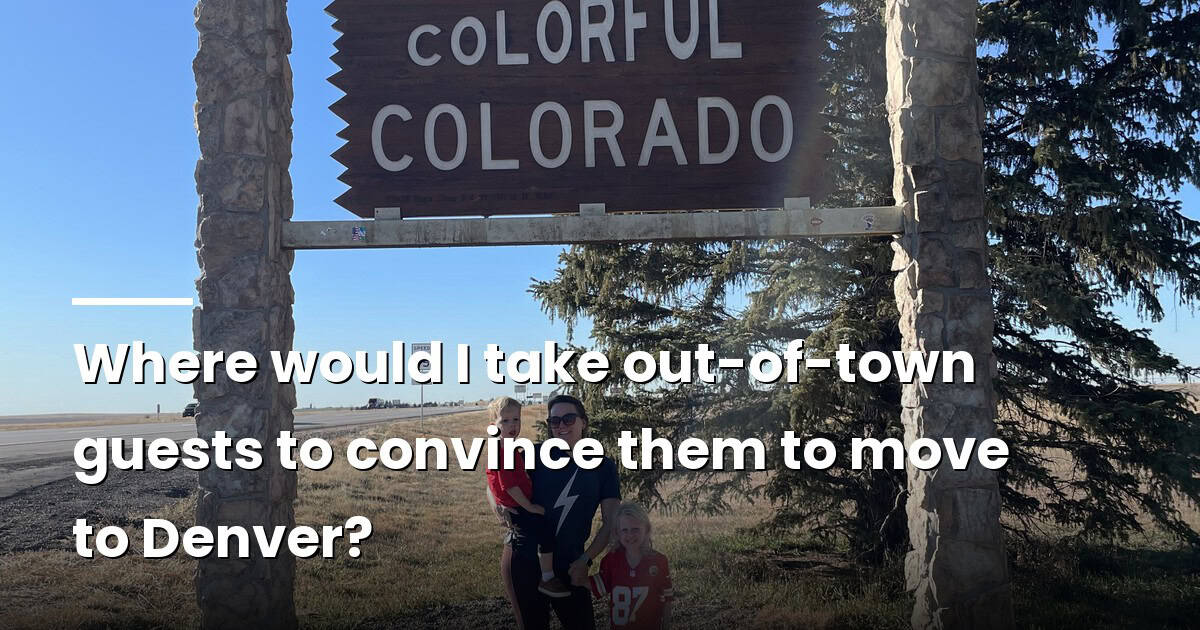 Trying to get grandma and grandpa to live closer? Your best friend from college is visiting, but you wish she'd stay forever? Or just want to show off your city? In any case, there's a real itinerary I reach for, and it's built around one idea: don't just tell people why Denver works, put them somewhere they can feel it.
Head out first thing in the morning. Drive up Lookout Mountain Park, and you get panoramic views of the city skyline against the Continental Divide from the Lariat Loop Scenic Byway. It sounds like a cliché until you're standing there with someone who just flew in from a place where “the mountains” means a two-hour drive and a hotel reservation. Here, it's a detour on the way to breakfast. That's the whole pitch in one stop.
From there, I like to walk people through Denver's Union Station — the restored 1914 terminal that now houses Tavernetta and Mercantile Dining alongside the trains. Then we'll wander a few blocks into LoDo, where more than 90 brewpubs and restaurants fill converted warehouses. If there's time, RiNo is an intriguing part of this argument: murals covering entire buildings, Denver Central Market's ten food vendors under one roof, and craft breweries that didn't exist five years ago. Your visitors need to see that these neighborhoods are walkable, distinct from each other, and still filling in — RiNo especially still has that unfinished, becoming-something energy.
City Park is Denver's largest park, and it's doing double duty as a greatest-hits reel: the Denver Zoo Conservation Alliance and the Denver Museum of Nature & Science both sit inside it, along with lakes, mountain views, and a golf course. I'll usually pair it with a stop at Denver Botanic Gardens nearby — 23 acres, 45 individual gardens, and a Japanese garden that surprises people every time. It's the kind of afternoon that answers “but what do you actually do here” without me having to say a word.
This is non-negotiable. Cherry Creek North gives you the polish — 300-plus stores, 75 restaurants, the kind of upscale walkable shopping district that reads as “real city” to people who are skeptical Denver is one. LoHi gives you the personality: Little Man Ice Cream's giant milk bucket building, Mezcaleria Alma, El Five. If someone's on the fence about whether Denver's food scene is hype or substance, a good meal in either neighborhood usually settles it. And if they're the adventurous type, I'll sometimes work in Casa Bonita. Cliff divers and puppet shows aren't fine dining, but nobody forgets it.
I try to save this for last, ideally near sunset. Red Rocks Amphitheatre is free to visit outside of ticketed events, and the sandstone formations with the city skyline behind them are the single most photographed argument for living here. Even an empty venue makes the case. It's breathtaking and definitely an unforgettable bucket list item.
Every one of these stops is doing a version of the same job: showing someone that Denver isn't choosing between mountains and city, food scene and outdoor access, walkability and space. It's not really a sales pitch when the city does most of the convincing itself. Our job as Denverites is just picking the order and getting people there before the parking lot fills up. With 300 days of sunshine a year and a diverse and exciting itinerary, the city will sell itself!
If you've got someone visiting who's on the fence about relocating, tell me their interests and we can build a custom version of this that fits their timeline. And when they do fall for it, let me know because I'd love to help them make Denver home!
 If you want new-build houses, a serious trail network, and a 15-minute train ride downtown, Central Park is worth putting on your list. It's Denver's largest neighborhood, and it's built almost entirely from scratch on one of the more interesting pieces of land in the city.
Central Park sits on the former Stapleton International Airport, which closed in 1995 after Denver International Airport opened. The redevelopment kicked off in 2001 under a master plan built around pedestrian-friendly streets rather than car-first sprawl, and it's grown into roughly 4,700 acres, 12,000-plus homes, and around 30,000 residents. In 2020, the neighborhood formally changed its name from Stapleton to Central Park, following a citywide vote. 63% chose the new name over the runner-up, "Skyview", after years of community pushback against naming the area for a former Denver mayor with a documented racist history. It's a rare case of a neighborhood's name actually reflecting a decision its residents made together.
Central Park isn't one neighborhood so much as twelve, each with its own character: Beeler Park, Bluff Lake, Central Park North, Central Park West, Conservatory Green, East 29th Avenue, Eastbridge, North End, South End, Westerly Creek, Wicker Park, and Willow Park East. Between them you'll find more than 50 parks, 7 pools, and a 38-mile trail network — plus 1,100 total acres of parks and open space, anchored by the 80-acre Central Park itself. On the edges, the neighborhood backs up to the Sand Creek Regional Greenway and Bluff Lake Nature Center, one of the largest urban wildlife refuges in the country, where you can genuinely go birdwatching without leaving city limits.
The sub-neighborhoods aren't interchangeable, either. Eastbridge mixes modest homes with much larger ones and still manages mountain views from its pocket parks. Central Park West's architecture was designed to face the park itself. North End, which borders the Rocky Mountain Arsenal National Wildlife Refuge, is known for its colorful houses and the neighborhood's largest pool. If you're set on Central Park but haven't landed on a sub-neighborhood yet, that's usually where the real decision-making happens.
The RTD A Line has run through the neighborhood since 2016, with Central Park Station putting you about 15 minutes from Union Station without ever touching your car. Combined with the walkable street grid the original master plan was built around, it's about as transit-friendly as new construction gets in Denver.
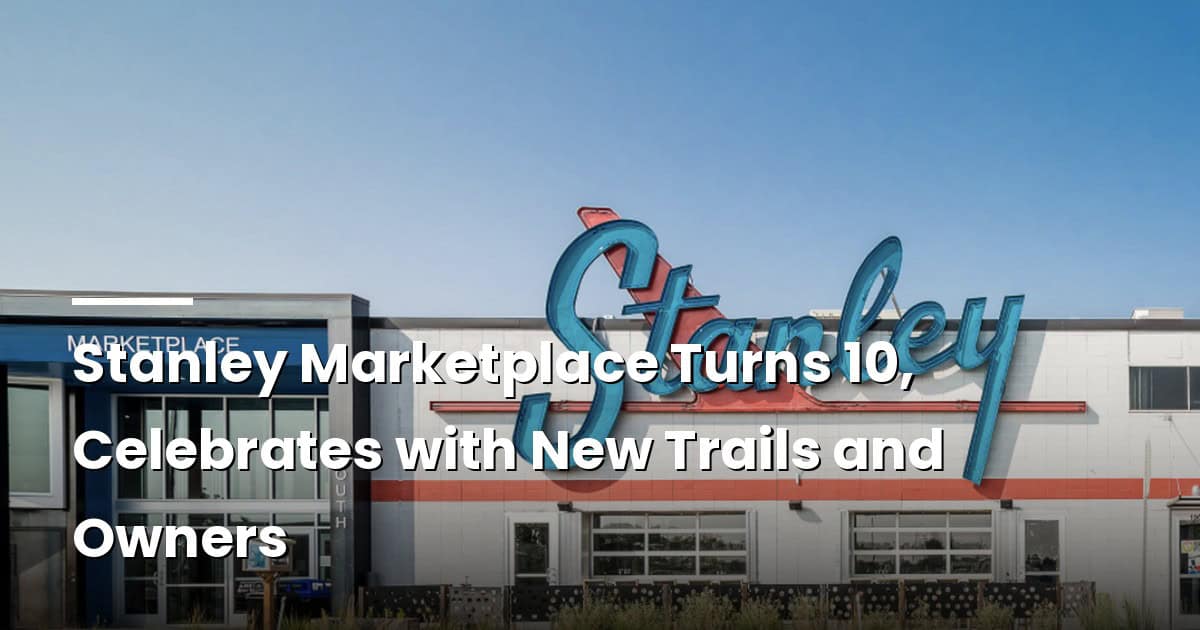
Stanley Marketplace, tucked into the Bluff Lake area, is the anchor most people know Central Park for — a converted midcentury aviation building now packed with local food vendors and shops. Conservatory Green has its own retail cluster, The Shops at Conservatory, including a Torchy's Tacos for anyone who needs a breakfast taco fix. East 29th Avenue Town Center hosts Founders Green, which runs a farmers market, concerts, and movie nights through the warmer months, along with an annual beer festival. If you're the type who wants a dog park, a community garden, a skate park, and a climbing wall within walking distance, South End's Greenwood Park covers all four.
Central Park is a genuinely competitive corner of Denver even in a market that's cooled off elsewhere. As of June, the median sale price sits at $790,975, homes are going under contract in about 10 days on average, and roughly a quarter of homes are selling above list price. The average listing gets close to two offers. It's not the frenzy of a few years ago, but it's meaningfully tighter than the metro-wide numbers right now — this is one of the neighborhoods where buyers still need to move fast and come prepared.
Central Park makes the most sense for buyers who want newer construction, don't mind paying a premium for walkability and trail access, and like the idea of a neighborhood built around parks rather than around a highway. It's a great fit for families. The pool and rec center access alone is hard to match elsewhere in Denver. If you're weighing Central Park against a more established neighborhood, the tradeoff is usually price and character versus newness and infrastructure. Tell me what matters more to you and I can help you figure out which of the twelve sub-neighborhoods actually fits your lifestyle best.

Doing both at once feels like the hardest version of an already stressful process. Sell first and you might need a place to stay. Buy first and you might end up carrying two mortgages. Here's the good news: Denver's market right now actually makes this easier than it's been in years. Let's talk through why, and what your actual options are.
As of early August, active listings across the metro sit around 12,600, showing traffic is trailing last year by about 7.5%, and pending contracts are down 10% year-over-year. Months of supply is rising across every property type. In plain terms: this is a buyer's market, and the leverage buyers have is real and still growing.
That shows up in the numbers from July too. Median sale price across the metro was $605,000, active listings had climbed to over 13,100, and homes were sitting a median of 21 days before going under contract — longer for condos and townhomes. More than half of active listings have taken a price reduction at some point. Sellers are still netting close to full asking price after concessions, so it's not a collapse, it's a reset. But it's a market where buyers can negotiate, and where sellers need to be realistic about time and price.
A softer market cuts both ways when you're doing this dance, and mostly in your favor. As a seller, you'll likely need to price competitively and expect a longer runway than you would have two or three years ago. As a buyer, you have real room to negotiate, more inventory to choose from, and less pressure to waive every contingency just to compete.
A home sale contingency. You make an offer on your next place with a clause that lets you walk away, and get your earnest money back, if your current home doesn't sell within an agreed window. Sellers in a hot market often reject these outright, or attach a kick-out clause that gives them 72 hours to accept a better offer if one comes in. In today's slower Denver market, though, sellers are seeing fewer competing offers overall, which makes them more willing to consider a contingent buyer than they'd have been in 2021 or 2022.
Sell first, then rent back. You close on your current home and negotiate a short-term lease with the buyer so you can stay put while you finish shopping. This unlocks your equity for the next down payment and removes the contingency problem entirely. The catch is that it depends on your buyer being flexible, and flexible buyers are more common when they aren't competing against five other offers — which, again, describes a lot of Denver right now.
A bridge loan or HELOC. You borrow against the equity in your current home to fund the purchase of the next one before your old home sells, which lets you make a clean, non-contingent offer. Terms vary a lot by lender. Some short-term bridge products run interest-only for around six months with loan amounts up to $500,000. It's real debt on top of your existing mortgage until your old home closes, so it's worth running the numbers carefully with your lender before you commit.
Price your current home using real, current comps rather than what your neighbor's identical house sold for two years ago. Get your home staged and professionally photographed before it hits the market. Have your mortgage pre-approval in hand before you start touring. And if you're the one buying, a slightly larger earnest money deposit or flexible possession terms can make a contingent offer meaningfully more attractive to a seller, even without waiving your protection.
The one thing I'd caution against: don't let a tight timeline push you into a bad decision on price, on either end. It's tempting to drop your asking price just to force a sale before your next closing, or overpay to lock down a house before your old one sells. A little planning up front avoids most of that pressure entirely.
The sequencing question is exactly why I like to get looped in on both sides of this from day one, not after one piece is already moving. When I know your full picture — what you need from the sale, what you're hoping to buy, and how much flexibility you actually have on timing — I can build a strategy around the whole transaction instead of reacting to whichever piece moves first. In a market like this one, with more room to negotiate on both ends, that planning is worth more than it's been in years.

If it feels like every other week there's a bear sighting somewhere in the metro area, you're not imagining it. Colorado Parks and Wildlife has logged 6,129 bear reports statewide between January 1 and August 13 this year. That's nearly double the 3,115 reports from the same stretch in 2025, and already more than all of 2025's full-year total of 5,299. Denver's part of that: the metro area has seen more than 800 sightings this year, roughly triple what it saw over the same period last year.
The driver is drought. A late May freeze and a dry, low-snowpack summer hit the berries, nuts, and native plants bears rely on before winter, and wildfires have burned through even more of what was left. Right about now, black bears enter what wildlife officials call hyperphagia — a stretch of late summer and fall where they'll spend up to 20 hours a day foraging to pack on fat for hibernation. When the natural food isn't there, they go looking elsewhere, and "elsewhere" increasingly means trash cans, bird feeders, and open garages in neighborhoods that used to feel bear-free.
This year's sightings have shown up well inside city limits. A bear was spotted in a tree near South Pennsylvania and Louisiana in Platt Park in August — a few blocks from Washington Park, Sushi Den, and McKinley-Thatcher Elementary. Bears have also turned up in Harvey Park and Marston, both miles from the mountains. One Denver-area barbecue restaurant, Hickory House, has dealt with a bear stopping by on a roughly weekly basis, drawn in by the smokers.
The stakes go beyond a startling photos for the neighborhood group chat. Colorado has recorded six bear attacks so far this year, four of them within a single week in August. One happened in Jefferson County, southwest of Denver, where a subadult bear attacked a man hiking back to his car near the North Fork trail — he needed hospital treatment for leg injuries, and wildlife officers later located and euthanized the bear.
CPW's guidance hasn't changed, it's just more urgent this year: secure trash and recycling until pickup morning, bring in bird feeders during bear season, keep pet food indoors, and clean grills and store them somewhere a bear can't get into. If you see a bear in your neighborhood, call it in (Denver's CPW office is at 303-291-7227). Officials have said the calls that come after a bear's already hit its third or fourth house in a week are much harder to act on than the first one. Colorado also strengthened enforcement this year against people who knowingly leave food or waste out that attracts bears, so this isn't just a suggestion anymore.
I bring this up because it's genuinely relevant if you're buying or already living in a neighborhood near open space, greenbelts, or foothills-adjacent parks — which, in Denver, is a lot of neighborhoods. If you're touring homes near Wash Park, the Highline Canal, or anywhere backing up to a park or trail system, ask about trash storage, whether there's a shed or garage for cans, and how the HOA (if there is one) handles bear-attractant rules. It's a small thing to think about during a home search, but it's the kind of small thing that makes a real difference in whether you end up dealing with a 300-pound visitor in your backyard.
Mostly, though, this is just a good year to take the basics seriously — secure the trash, bring in the feeders, and give bears the space and the calories to get through winter without needing yours.

Yes! In fact, it's been required for longer than most people realize. So let's walk through what's actually required, why, and what it does and doesn't lock you into.
Since August 17, 2024, any real estate agent working through the MLS has been required, nationwide, to have a signed written buyer agreement in place before touring a home with a client — in person or on a live virtual tour. That rule came out of the National Association of Realtors' settlement and applies everywhere agents use an MLS, Colorado included. So if you've toured a home with an agent any time in the last two years, you likely already signed something, even if it didn't feel like a big production.
Colorado is now stacking a state law on top of that national rule. HB26-1426 took effect August 12, 2026, and requires brokers to put a formal brokerage relationship in writing, with compensation clearly spelled out.
Here's the twist: Colorado's Division of Real Estate has clarified that showings, open houses, and comparative market analyses don't count as "licensed duties" under this particular state law. Strictly speaking, the state licensing statute wouldn't require the paperwork for a plain walkthrough. In practice, that distinction rarely shows up, because the NAR rule already covers you the moment your agent is touring a home with you — regardless of how Colorado's licensing law defines things. Two rules, two different triggers, landing in roughly the same place for most buyers.
The document is Colorado's standard form, the Exclusive Right-to-Buy Listing Contract. It largely focuses on the following: that you're working exclusively with that broker for the length of the agreement, how compensation is structured and who's paying it, and the term of the relationship — when it starts and what ends it. It's a real commitment, but it's also negotiable. You can ask for a shorter term. You can ask questions about the compensation structure. None of it is take-it-or-leave-it.
An open house is still a walk-in — you don't need an agreement to attend one on your own. And casually looking something up, or asking a friend who happens to be an agent a quick question, isn't the same as engaging them to represent you. The line is really about whether someone is touring a specific home with you as your agent.
I actually think this is a good change, even though it adds a step that didn't used to exist. Compensation used to be decided before you were ever in the room, buried in the listing agreement between the seller and their agent. Now it's a conversation you and I have directly, in writing, before we start touring — which means you know exactly what you're paying for and why, and you have room to negotiate it.
What I won't do is make that first conversation feel like pressure. When we meet, I'll walk you through the agreement, answer every question you have about the terms, and make sure you're comfortable before you sign anything. This isn't me trying to lock you in before you've even seen a house — it's Colorado (and honestly, the whole industry) catching up on transparency that was overdue.
If an agent asks you to sign something before your first showing, that's not a red flag. It's the rule now. Just make sure you actually read what you're signing, and don't hesitate to ask what happens if you want to walk away.
This is general information based on current Colorado and NAR guidance as of publication and isn't legal advice — for questions about your specific situation, talk to your agent or a real estate attorney.

















Socials