
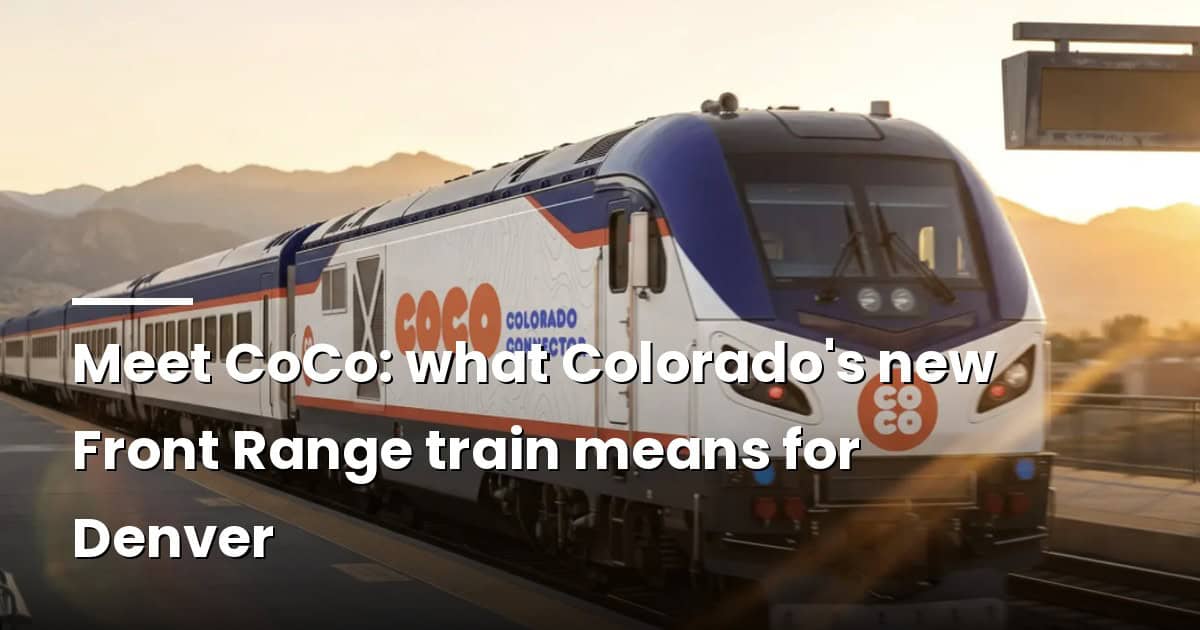
 There’s a new name floating around Denver real estate conversations this fall: CoCo. It’s not a coffee shop or a new listing — it’s the Colorado Connector, the intercity passenger train set to link Fort Collins to Pueblo, with Denver Union Station right at the center. First trains are expected by 2029, and I’ve been fielding enough questions from clients about what this actually means that it seemed worth a proper rundown.
What is CoCo?
CoCo isn’t light rail or a commuter train — it’s built for longer trips along the I-25 corridor, with the kind of amenities you’d expect from an intercity train: wider seats, luggage space, bike storage, and food service. Think less “hop on for two stops” and more “work or relax while someone else handles I-25 traffic.” Amtrak is the planned operator, running on tracks owned by BNSF Railway north of Denver (under a 25-year access agreement) and Union Pacific south of Denver. The project is run by the Front Range Passenger Rail District, in partnership with RTD and CDOT.
The route
The full corridor runs 190 miles and will eventually connect 12 stations:
•Fort Collins, Loveland, Longmont, Boulder, Louisville, Broomfield, Westminster
•Denver Union Station — the hub
•Littleton, Sterling Ranch, Colorado Springs, Pueblo
•Trinidad, where new infrastructure will also support Amtrak’s Southwest Chief route
When it’s actually happening
Starter service begins in 2029 with three daily round trips between Fort Collins and Denver across eight stations — no new tax required, since that phase is funded through existing state and RTD commitments. Full build-out to Colorado Springs and Pueblo depends on a ballot measure this November: a 0.333% sales tax (a third of a penny per dollar) in the communities with planned stations, projected to generate about $1.5 billion over 25 years for infrastructure like parking and last-mile connections. If that measure doesn’t pass, starter service still runs on schedule — the southern leg just waits longer.
Where the fox comes from
The name itself came from a public vote — nearly 26,000 Coloradans weighed in before the district landed on Colorado Connector, shortened to CoCo. In July, they unveiled the branding: a red fox wearing a Colorado-flag bandana, in blue and orange that will look familiar to anyone who’s watched a Broncos game. General Manager Sal Pace called it a way to give “Coloradans a brand they can recognize, make their own and grow with.”
What it means if you’re buying or selling in Denver
Union Station has already reshaped how people think about that stretch of downtown, and I expect a direct line north to Boulder and Fort Collins and eventually south to Colorado Springs to keep adding to that pull. Transit access has historically been a real driver of home demand near well-connected hubs, though it tends to build gradually as service actually starts running rather than the moment it’s announced. If you already own downtown or are weighing a purchase near Union Station, this is one more long-term factor worth having on your radar.
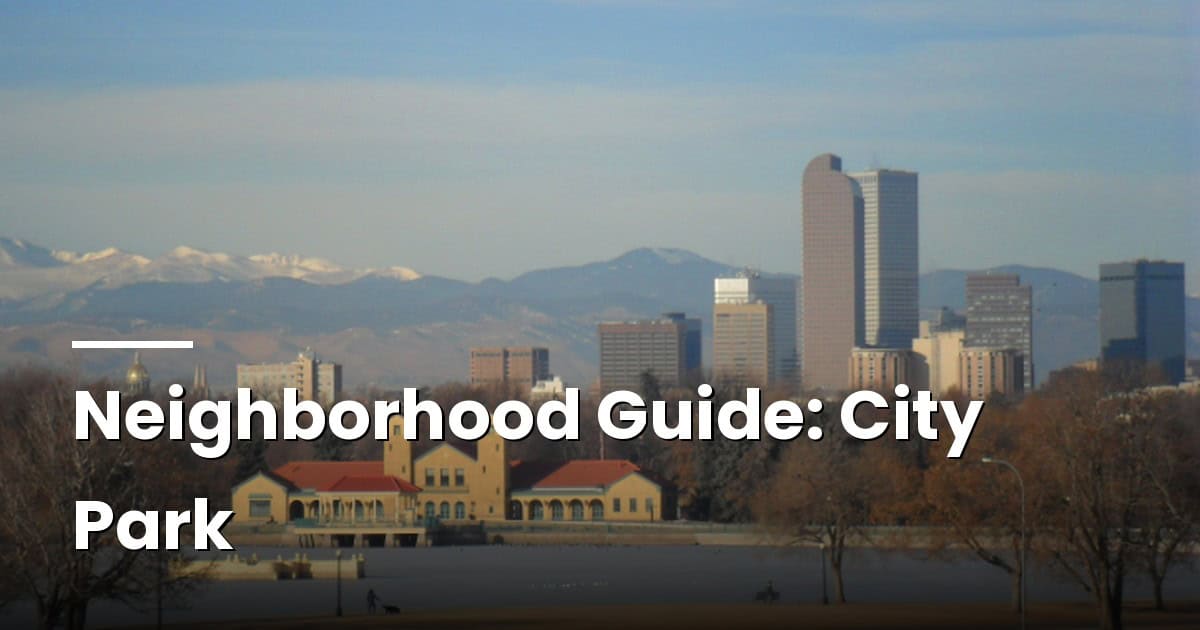
For buyers and owners in Park Hill, Congress Park, and City Park specifically, this isn’t really a station-adjacent story as none of the twelve stops land in northeast Denver. It’s more of a “your options just expanded” story: if work, family, or CU Boulder trips have you driving I-25 regularly, a reliable train from Union Station changes that calculus, and Union Station is a quick trip from all three neighborhoods.
It’s early. 2029 is still three years out, and November’s ballot measure will decide how quickly the rest of the corridor comes together. But it’s a project worth knowing about if regional transit factors into how you think about where you live, Plus, now when CoCo comes up at a dinner party, you’ll know exactly what people are talking about.
















Socials