
 The short answer
Waymo began giving rides in Denver in July, but not to the general public yet — only to its own employees. The company has been testing routes with a safety driver on board for months, and it says driverless rides for everyday Denverites are coming “later this year.” So the cars you're seeing right now are mapping streets, gathering data, and quietly proving themselves before the doors open to the rest of us.
What's under the hood
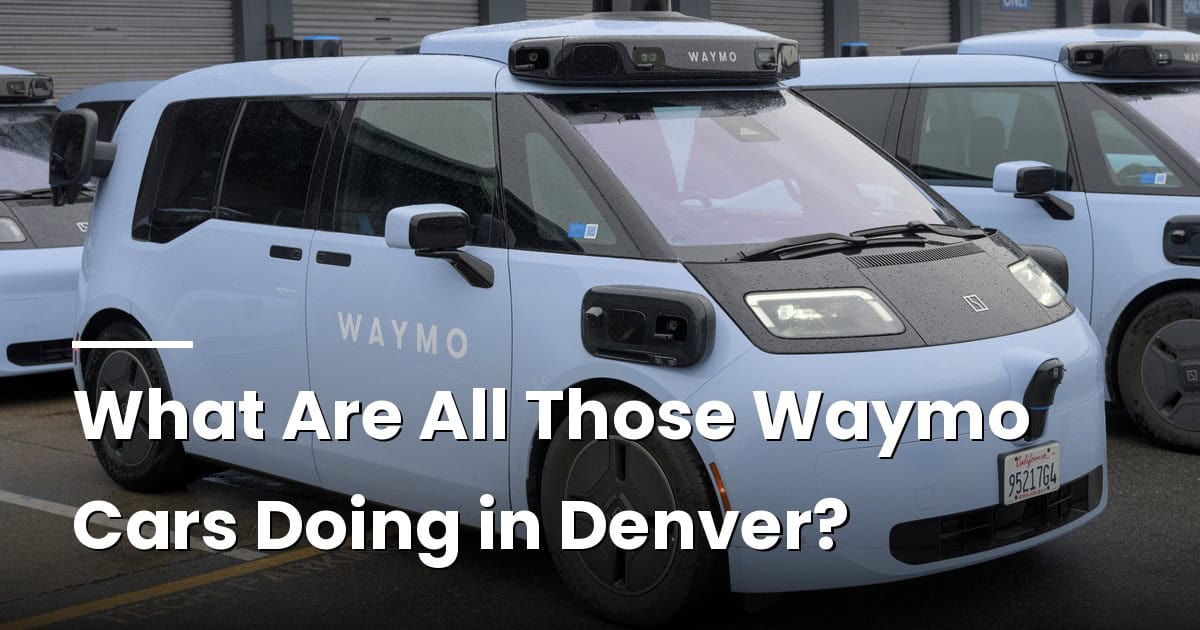
The vehicle itself is worth a second look. Waymo calls it the Ojai, and it's not the boxy Jaguar I-PACE you might picture if you've ridden in one in San Francisco or Phoenix. It's a minivan-style ride built on a Zeekr electric platform from the Chinese automaker Geely, running Waymo's sixth-generation self-driving system, which the company designed with cold-weather performance in mind — a detail that matters more here than in most of Waymo's other cities.
Why Denver, and why now
Waymo announced the Denver expansion back in December 2025, and Colorado turned out to be a fairly welcoming place to land it. A 2017 state law already treats autonomous vehicles as legal as long as they follow the same rules of the road as everyone else, and it keeps individual cities and counties from tacking on extra restrictions. Governor Jared Polis has been an outspoken supporter, framing it as a road-safety play more than a novelty. “The single largest cause of crashes is driver distraction,” he's said, arguing that pulling distracted humans out of the equation is worth pursuing even as the technology matures. Waymo has also been meeting with local groups, including the Colorado Center for the Blind, AAA Colorado, and the Denver Public Schools Foundation, as it builds out the service.
How this compares to other Waymo cities
Denver is joining a fairly established club. Waymo now operates in roughly a dozen cities, delivering something like 500,000 rides a week combined, with typical local fleets running 300 to 600 vehicles (San Francisco's is bigger, north of 800). Adoption has looked very different city to city — in Austin, Waymo reportedly captured something like 20% of Uber-style trips within weeks of launching, while in Los Angeles, uptake has been much slower, with only around 5% of residents having tried an autonomous ride in a year. Which of those Denver ends up resembling is still an open question.
The snow question
This is the one every Denverite asks first. The fleet learns collectively, so snow driving lessons picked up in Minneapolis or icy mornings elsewhere feed back into every car in the network, Denver's included. The company has released footage of its vehicles handling snow-covered roads in other markets as a preview of what it expects to bring here. Plenty of residents remain skeptical until they see it handle a real Front Range snowstorm in person, and that's a fair place to reserve judgment.
Not everyone's sold
Denver's taxi companies have pushed back publicly against the rollout, and they're not alone in raising concerns. Nationally, Waymo has logged around 1,700 crashes since 2021, including 157 with injuries and two fatalities, though the company says none were caused by its vehicles. A recall earlier this year addressed a software issue that let some cars drive into standing water. Public sentiment is mixed, too: one USC study found nearly 40% of people say they're uneasy about riding in an autonomous vehicle at all, even though roughly 70% of people who've actually used Waymo say they prefer it to a human driver once they try it. That gap between fear and experience is likely to shape how quickly Denver warms up to the idea.
What to expect next
For now, this is still a slow, deliberate rollout rather than a citywide launch. If you're in or near RiNo, Baker, or Cherry Creek, keep an eye out — you're in the test zone. For everyone else, the bigger moment comes later this year, when Waymo says it will open rides to the public and start expanding beyond those first three neighborhoods, eventually reaching toward the airport. Whether Denver ends up looking more like Austin's fast adoption or LA's slow build will say a lot about how this city takes to sharing its streets with a driverless fleet.


















Socials