
Park Hill Neighborhood Guide11.04.2026
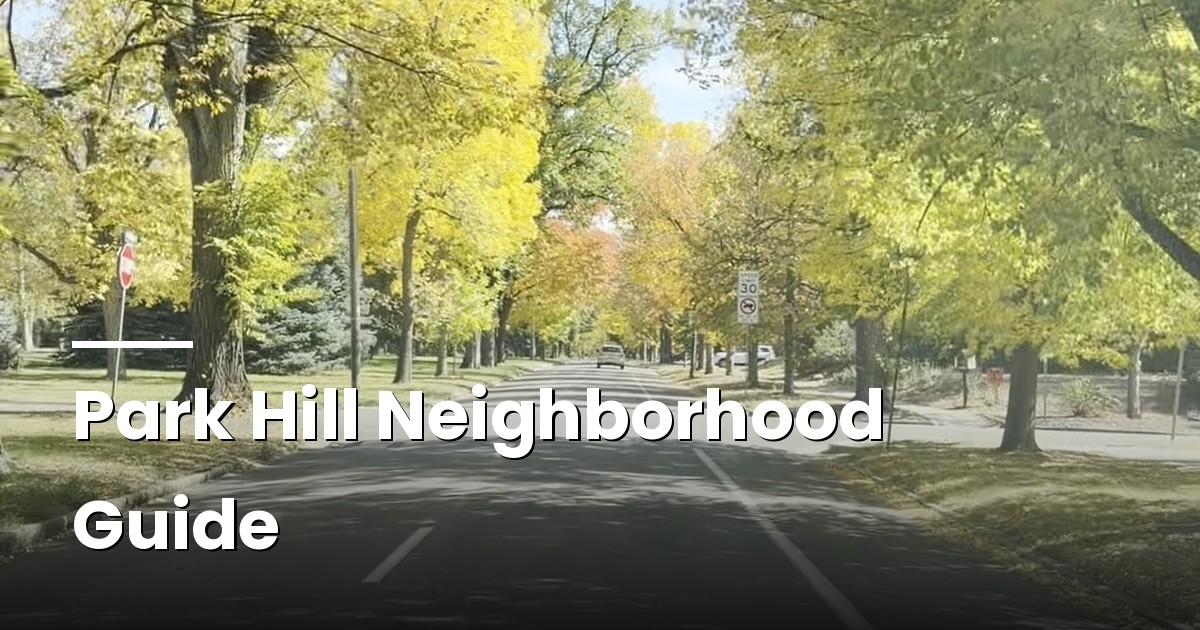
Thinking of calling Park Hill home? Great idea! I've collected some of the details you'll want to know before moving to [...]
Thinking of calling Park Hill home? Great idea!
I've collected some of the details you'll want to know before moving to Park Hill! And while I'm completely biased (Yes I've lived here for more than 11 years), it really is one of the best neighborhoods in Denver!
Below, you'll find a rundown of each area, my favorite local spots, real commute times, how schools work here, and the community events worth putting on your calendar.
Park Hill is less than five miles east of downtown Denver, bordered by Colorado Boulevard on the east, Quebec Street on the west, Colfax Avenue on the south, and approximately East 52nd Avenue to the north. The City of Denver splits it into three official neighborhoods: South Park Hill, North Park Hill and Northeast Park Hill.
All three Park Hill neighborhoods share the same east and west borders (Colorado Boulevard and Quebec Street) and stack north to south. Each one has its own housing stock, price point and personality.
Area | Rough boundaries | What you'll find |
|---|---|---|
South Park Hill | Colfax Ave to E 23rd Ave |
|
North Park Hill | E 23rd Ave to Martin Luther King Jr. Blvd |
|
Northeast Park Hill | MLK Blvd north past I-70 |
|
This is the Park Hill most people picture: wide parkways, oversized lots, and mature trees . City Park, the Denver Zoo, and the Denver Museum of Nature & Science sit just across Colorado Boulevard. You'll find the most variety in price here, from classic brick bungalows to large estates along Montview Boulevard and the 17th Avenue and Forest Street Parkways.
North Park Hill has a deep history as the heart of Park Hill's integration movement in the 1960s, and it's still the most diverse part of the neighborhood. Expect a mix of bungalows, post-war brick ranches and thoughtful new construction, usually at a lower price per square foot than South Park Hill. Retail is more limited, but the Park Hill Commons at 28th and Fairfax offers Long Table Brewery, Yuan Wonton, and Sexy Pizza, along with wine and coffee options.
Northeast Park Hill offers the most accessible entry point into Park Hill, with a housing stock dominated by mid-century ranches, duplexes, and townhomes. This part of the neighborhood includes the 155-acre former Park Hill Golf Course, now Park Hill Park, which is the largest acquisition of private property for park use in Denver's history. Additionally, the A Line's 40th & Colorado station makes it easy to get downtown or to the airport without a car.
Park Hill is mostly houses, but local commercial offerings cluster in a few small pockets: 23rd Avenue around Dexter Street, Kearney Street at 22nd, Oneida Park at 22nd and Oneida, and 29th and Fairfax. Having these neighborhood shopping centers is one of my favorite parts of living here. You'll always see someone you know, and it's easy to become a regular. In my opinion, this is what gives Park Hill its' neighborly feel. Here are the places I send everyone.
If Park Hill had a front porch, it would be Spinelli's. Head straight to the deli counter in the back for a sandwich, then browse fresh produce, Italian specialties, and their own pre-made meals on the way out. We often stop in and let our kids pick a treat after playing at nearby Turtle Park (Formally W. H. Ferguson Park).
Kyndred is the cutest home goods boutique. They have a curated mix of artisanal decor, kitchen pieces, and gifts made from natural, ethically sourced materials. I always stop by on my way to book club and grab some of the locally made toffee for the host.
Honey Hill Cafe Espresso, toasts, and pastries across the street from Spinelli's and Turtle Park. They have a great outdoor patio, and it's a great spot to bring your laptop and knock out some work.
Cake Crumbs Bakery & Cafe A Kearney Street institution with custom cakes, sweet treats and breakfast and lunch menus.
Torpedo Coffee Small-batch roasts in Oneida Park, next to DANG Soft Serve and The Local Butcher.
Long Table Brewhouse Park Hill's own neighborhood brewery since 2018, with a dog-friendly wraparound patio, food trucks, and a mix of traditional German styles and hazy IPAs. It's walkable for most of North Park Hill.
Neighbors Park Hill An elevated happy hour with an extensive wine menu and a great selection of meats and cheeses.
Trellis A moody wine bar with several N/A options and a knowledgable staff. You can also rent out the top floor balcony for medium-sized events!
DANG Soft Serve, 2211 Oneida St. This soft serve concept is from the team at Little Man Ice Cream. They have rotating flavors and serve the most delicious fries!
The Local Butcher, 2242 Oneida St. A great spot to grab brisket for the smoker or burgers for the grill. They also have a great offering of rubs and sauces.
Little Bird Denver, 2200 Kearney St. This adorable childrens' boutique is a great place to pick up a birthday gift or grab a special-occasion outfit!
Park Hill's location is one of the neighborhood's biggest selling points and provides convenient access to downtown as well as to I-70 for mountain getaways or trips to DIA.
Destination | Typical drive (off-peak) | Rush hour |
|---|---|---|
Downtown Denver | 10 to 15 min | 20 to 30 min |
Denver Tech Center | 20 to 25 min | 35 to 45 min |
Denver International Airport | 25 to 30 min | 35 to 45 min |
Mountains (Idaho Springs) | 45 min | 1 hr+ on weekends |
Mountains (Summit County ski areas) | 1.5 to 2 hrs | 2.5 hrs+ on weekends |
A few notes:
Skip the drive to DIA. The A Line's 40th & Colorado station sits at the northwest corner of Park Hill, and the full Union Station to airport run takes about 37 minutes, so you're on the train for roughly 25 minutes from here.
Bike-friendly to downtown. Bike lanes on 23rd Ave, 26th Ave and MLK Blvd connect to City Park and into downtown.
Ski days. Northeast Park Hill puts you right on I-70, so you're heading west before most of the city reaches the on-ramp.
Drive times are my own estimates and will vary with time of day, weather and where in Park Hill you start.
Park Hill is served by Denver Public Schools (DPS), and how your address maps to schools changes by grade level. Here's the short version: elementary is by neighborhood boundary, middle school is by a shared enrollment zone, and most of Park Hill is zoned for East High School. Always confirm a specific address with the DPS boundary map before you buy.
Park Hill is home to a host of elementary schools, including Neigborhood Schools: Park Hill Elementary, Stedman Elementary School, Hallett Academy, and Smith Elementary.
If you live within a school's boundary, your child can enroll automatically, but you also have the option to enter the lottery and choice into a different school of your choosing.
Park Hill doesn't have a single neighborhood middle school. Instead, it shares the Greater Park Hill / Central Park Enrollment Zone with Central Park. Families rank their choices, and zone residents get priority for these schools:
McAuliffe International School (the only enrollment zone school located in Park Hill, at 26th and Holly)
Denver Green School Northfield
DSST: Montview Middle School (charter)
DSST: Conservatory Green Middle School (charter)
William (Bill) Roberts K-8 School
You're guaranteed a seat at a school in the enrollment zone, but not necessarily your first choice, and you must submit a SchoolChoice application for 6th grade. Students who live 2.5 miles or more from their enrollment zone school are eligible for DPS transportation.
The majority of Park Hill is zoned for East High School, Denver's first high school, located on the City Park Esplanade. A small slice of the neighborhood east of Monaco Parkway falls in the Northfield High School boundary instead, so double check if you're house hunting on the east side. Denver School of the Arts, a DPS magnet school for grades 6 to 12, sits on Montview Boulevard in Park Hill and admits students by audition.
DPS lets any family apply to almost any school in the district through SchoolChoice.
Explore. Tour schools in the fall. Most open houses run October through December.
Apply in Round 1. For the 2027-28 school year, Round 1 opens in early December 2026 and closes in mid-January 2027. You'll rank your preferred schools in one online application.
Get results. Placements come out in late February 2027.
Round 2 if needed. Round 2 opens after Round 1 results and runs first-come, first-served (no lottery) into late summer.
You need to apply if your child is entering ECE, kindergarten, 6th or 9th grade, or switching schools. Students staying at their current school usually don't. DPS also confirmed that current boundaries and enrollment zones will stay in place for 2027-28.
Greater Park Hill Community, Inc. (GPHC) is the registered neighborhood organization that runs Park Hill's biggest annual events, publishes the monthly Greater Park Hill News, and operates a neighborhood food pantry. Event proceeds fund those programs, so showing up does real good.
Event | When | Where |
|---|---|---|
Park Hill Yard Sale | A Saturday in late May | Homes across Greater Park Hill |
Park Hill Street Fair | A Sunday in September (same day as the Home Tour) | Forest Parkway between Montview Blvd and 19th Ave |
Park Hill Home Tour | A Sunday in September | Five or six homes across the neighborhood |
Once a year, dozens of households set up on the same Saturday morning, and GPHC publishes an online map of every sale. Sellers register in advance and must live within the Greater Park Hill boundaries. Bring cash, Venmo and your own bags. It's also one of the best ways to meet neighbors after a long winter.
The free Street Fair takes over the grassy stretch of Forest Parkway with dozens of local artisan and community booths, food trucks, a beer and wine garden, live music all day, kids' activities and a sustainability zone.
The Home Tour started in 1978. Today it's GPHC's largest fundraiser, opening five or six homes (and often a landmark building) that span everything from Victorians and Denver Squares to Tudors and modern builds. Tickets go on sale online in late summer at parkhillhometour.org and at local shops like Spinelli's. It's a great way to see what renovations look like inside historic homes.
Also worth knowing: the Park Hill 4th of July Parade rolls down 23rd Avenue every Independence Day, and the Park Hill Garden Walk showcases neighborhood gardens each June.
Every block in Park Hill feels a little different, and the best way to figure out which part fits you is to walk it. I'm happy to put together a tour of all three areas, grab a coffee at Honey Hill, and talk through schools, budget and what's coming on the market. No pressure at all.
Madison Spangler Broker Associate | REALTOR®, Corcoran Perry & Co. madison@corcoranperry.com | 913.481.1653 madisonspanglerhomes.com | @madisonspanglerhomes
Is Park Hill one neighborhood or three? Both. Locals call the whole area Park Hill, but the City of Denver splits it into South Park Hill, North Park Hill and Northeast Park Hill. Each has its own housing stock and price point, so it's worth knowing which one a home is in.
Which part of Park Hill is the most affordable? Northeast Park Hill generally offers the most accessible entry point, followed by North Park Hill. South Park Hill has the widest range, from brick bungalows to large historic homes along the parkways.
Is Park Hill walkable? In pockets. Most of the neighborhood is residential, but if you live near 23rd and Dexter, Kearney Street, Oneida Park or 28th and Fairfax, you can walk to coffee, dinner, groceries and a brewery.
How long does it take to get downtown or to the airport? Downtown is usually 10 to 15 minutes by car outside rush hour. The airport is about 25 to 30 minutes by car, or you can hop on the A Line at 40th & Colorado.
Do I get to choose my child's school? Kind of. Your address sets your neighborhood elementary school, your middle school enrollment zone and your high school, but DPS SchoolChoice lets you apply to almost any school in the district. Round 1 for the 2027-28 school year runs from early December 2026 to mid-January 2027.
What high school serves Park Hill? Most of Park Hill is zoned for East High School. Homes east of Monaco Parkway fall in the Northfield High School boundary, so confirm the address on the DPS boundary map.
When are the big neighborhood events? The Park Hill Yard Sale is a Saturday in late May, the 4th of July Parade rolls down 23rd Avenue, and the Home Tour and Street Fair happen on the same Sunday in September.
If you're planning to buy a home this fall, there's a change happening behind the scenes that's worth knowing about before you're mid-contract. Starting November 2, 2026, every appraisal on a conventional loan sold to Fannie Mae or Freddie Mac has to use a new format called UAD 3.6, and it's the biggest change to how appraisals get done in decades. It's not something you'll need to manage yourself, but it could affect your timeline and your closing costs, so I'd rather you hear about it now than get surprised by it in the middle of a transaction.
The old system used separate static forms depending on property type. UAD 3.6 replaces all of that with a single dynamic appraisal report that adjusts itself based on the property and how it's being valued. A few of the bigger shifts inside it: “gross living area” gets split into four separate measurements instead of one number, condition and quality now get rated separately for the interior and exterior, and features like ADUs, outbuildings, energy efficiency, and even broadband access get their own dedicated fields instead of a passing mention in an addendum.
None of this changes what an appraisal is for. It's still there to confirm your home is worth what you're paying for it. But it does mean appraisers are collecting a lot more structured data per report than they used to.
That extra data collection has a real cost, and appraisers are already telling customers they expect to pass some of it along. In a recent survey of 900 appraisers, 52 percent said they expect to raise their fees under the new format, with increases ranging anywhere from $25 to more than $200 per appraisal. A separate survey from McKissock found 41 percent expecting increases, with several appraisers estimating the new report takes 25 to 40 percent longer to complete, and a few outliers on larger or more complex properties expecting fees to jump 200 to 300 percent.
To be clear, that's not universal. Plenty of appraisers expect their fees to hold steady, at least at first. But if your appraisal comes back a bit more expensive than you were quoted a year ago, this is almost certainly why.
Timeline is the bigger practical concern. In that same 900-appraiser survey, 63 percent expect turnaround times to stretch out, most commonly by one to two additional days, while only 3 percent expect things to move faster. Part of that is a straightforward learning curve. Appraisers are switching to new software and new terminology this fall, and most of them will still be completing some appraisals in the old format at the same time, since the transition isn't a clean cutover for every lender and loan type.
For you as a buyer, a day or two might not sound like much, but appraisal delays have a way of cascading. A late appraisal can push back your loan documents, which can push back your closing date, which can put your rate lock at risk if it wasn't built with enough cushion. None of that is guaranteed to happen, but it's exactly the kind of thing that's easier to plan around than to fix after the fact.
If your contract is going to close anywhere near November 2, a few things are worth doing proactively. Ask your lender directly how they're handling the UAD 3.6 transition and whether they're building extra time into their appraisal timeline for loans closing this fall. Confirm your rate lock period has enough padding to absorb a short delay rather than one that expires the same week you expect to close. And if you're buying a home with an ADU, an unusual layout, or anything that doesn't fit neatly into a standard appraisal, expect the report itself to look different and possibly take a little longer, simply because there's more to document now.
If you do get your appraisal back and the format looks unfamiliar, that's normal and not a red flag. “Finished Area Above Grade” replacing “Gross Living Area” is a vocabulary change, not a value judgment on your home.
This isn't a reason to delay your home search, and it's not something that should scare you off a fall closing. It's just one more moving piece that a good lender and a good agent should already be tracking for you. If you'll be on the hunt for a new home soon, let's talk about your specific timeline and make sure you have room to absorb a hiccup if one comes up.

If your listing agreement is running out, and your home hasn't sold, I want you to hear this first: your house is not the problem! More than 78,000 listings are exiting the MLS every week right now without selling, up from around 42,700 two years ago. Over half of all active listings nationally have been sitting for 60 days or more. You're not the exception right now. You're the pattern.
But that doesn't mean everything is out of your control! It means the plan needs to change, not your expectations about whether your home is sellable.
I know this stretch has probably been frustrating. Watching a home sit, fielding fewer showings than you expected, wondering if something's actually wrong with the house. Before we talk about anything else, I want you to know: a relisting isn't starting over. It's a chance to fix the specific things that were working against you the first time.
Here's what I've seen go wrong with expired listings, and what I'd do differently.
Pricing is the biggest factor by a wide margin. Homes listed above true market value expire at more than double the rate of properly priced homes, and listings that never get a price adjustment expire far more often than ones that do. Add in weak photography, thin marketing, or an agent who isn't proactive, and a good house in a good neighborhood can sit for months through no fault of its own.
The reassuring part: the vast majority of expired listings, somewhere around 90 to 95 percent, do eventually sell within six months once the approach changes. This isn't a sign your home won't move. It's a sign the last strategy wasn't the right one for right now.
I'd re-run your comps from scratch, not from your old listing. Pricing strategy that made sense six or nine months ago may not hold today, especially with Colorado buyers holding more negotiating leverage than they have in years. I'd rather show you the current data and price it right the first time than protect a number that's already cost you time on the market.
I'd get new photography before we do anything else. Professional photos correlate directly with faster sales and lower expiration rates. If your current listing photos are dated, poorly lit, or just didn't do the space justice, that's often step one, before we even talk price.
I'd build in tools to keep the deal moving, not just wait for offers. If a buyer tours and goes quiet, I use reverse offers to reopen the conversation instead of hoping they call back. If rate sensitivity is the real obstacle, I'll walk you through concessions and buydown math so we're solving the buyer's actual problem instead of just cutting price and hoping.
I'd keep you in the loop after every single showing. No radio silence, no “no news is news” for six weeks. You'll know what buyers said, what they didn't say, and how we should respond.
I'd make sure your listing actually shows up where buyers are looking. The overwhelming majority of buyers start their search online now, which means a listing that leans only on the MLS and a yard sign is competing with one hand tied behind its back. That means real social promotion, not just a single post the day you go live, and a website presence that keeps working for your listing every day it's on the market, not just the first weekend.
I'd treat your relisting like it matters, because it does. An expired listing isn't just a delay. It's disruption to your plans, and often real frustration with how the last few months went. I don't take that lightly. You deserve an agent who treats this relaunch with the same urgency you feel about it.
Sellers who relist tend to do it within 30 to 35 days of their contract ending, almost always with a new agent, and they're usually motivated to get it right this time. If that's you, the window right after your contract ends is actually a strong moment to relaunch, not a setback to recover from. A fresh set of eyes, updated pricing, and a real marketing plan can change the entire trajectory of your sale.
I work Park Hill, Congress Park, City Park, and the rest of East Denver every day, and I'd genuinely welcome the chance to look at what happened with your listing and tell you honestly what I'd do differently. No pressure, and no obligation. Let's just talk before you decide what's next.
 Higher rates have changed who's still out there looking, and they've changed how those buyers behave once they find something they like. They hesitate longer. They ask for more. They walk from deals they would have chased hard two years ago. If you're selling right now, that shift is real, but it doesn't mean your home won't sell. It means the sellers who adapt their approach are the ones still getting to the closing table.
Here's what's actually working right now, beyond just cutting your price and hoping.
If a buyer is stretched thin by today's rates, a price cut helps less than you'd think. Knock $20,000 off a $900,000 home, and the buyer's payment drops by roughly $120 a month. Put that same $20,000 toward a 2/1 rate buydown instead, where their rate is 2 percentage points lower in year one and 1 point lower in year two before settling at the note rate, and their year-one payment can drop by more than $1,000 a month.
That's not a marginal difference. That's the number that gets a hesitant buyer to actually qualify and sign. Buydowns solve the buyer's real problem, which is usually the monthly payment, not the sticker price.
If offering closing cost help or a buydown contribution feels like admitting weakness, let that go. Sellers included concessions in 44.7 percent of U.S. home sales this past August, up from 42.6 percent the year before, the highest August rate since 2020. Nearly 4 in 10 sellers expect to cut prices or offer incentives again this spring, up from 3 in 10 last year. Covering closing costs remains the single most common concession nationally.
Here in Colorado, that shift shows up locally too. Buyers have more negotiating leverage than they've had in years, and more sellers are cutting prices, covering repairs, and picking up closing costs just to get deals across the line. Offering a concession upfront isn't a sign your home isn't desirable. It's how deals get made in this market.
Know your ceiling before you negotiate: VA loans cap seller contributions at 4 percent of the purchase price, while conventional and FHA loans allow up to 6 percent depending on the buyer's down payment. That's real room to work with.
Sometimes the problem isn't price at all. It's a buyer who's toured your home twice, said all the right things, and then gone quiet. That's where a reverse offer earns its place.
Instead of waiting on them, your agent proactively presents terms: a price, a closing cost credit, a timeline, whatever removes their last excuse to hesitate. It's a pattern interrupt. Indecisive buyers often need a nudge more than they need a better deal, and a seller who steps forward first signals real motivation without looking desperate, as long as it's used at the right moment.
That moment is usually 30 to 45 days or more into your listing, once you're facing carrying costs or a pending move and genuinely want the deal to close. Try this in the first two weeks and buyers may sense weakness and lowball you. Wait until you're actually motivated, and it reads as confidence instead.
If you get an offer that isn't quite right, keep talking. In a market where qualified buyers are harder to come by, letting a negotiation go cold over a few thousand dollars rarely pays off. Counter, adjust the concession mix, ask what would actually get them to yes. The deals that die aren't usually the ones with the biggest gap. They're the ones where somebody stopped responding.
None of these tools work in isolation, and none of them replace a home that's priced right and shows well to begin with. But if you're watching your days on market climb and wondering whether to just wait it out, I'd rather talk through which of these actually fits your situation, your timeline, and your bottom line.
 Spring feels far away in September. Your kids just started school, the leaves haven't even turned yet, and April is seven months out. But if you're thinking about listing next spring, this is exactly the window when the smartest sellers get moving, not because there's anything to do on the market yet, but because the work that actually pays off takes lead time you don't have once the season starts.
Here's why timing matters more than usual this year, and what I'd have you doing this fall instead of waiting until February.
Realtor.com's 2026 seasonal analysis pegs April 12 through 18 as the single best week to list nationally: homes that hit the market that week sold about 1.3 percent higher than the yearly average, moved roughly 10 days faster, and pulled in nearly 17 percent more buyer views than a typical week. That's a real, data-backed window, not a rule of thumb.
But Colorado's spring also means a flood of new competition. Denver metro inventory jumped 65 percent by the end of April this year compared to two years earlier, and listings keep climbing into May and June. Translation: the sellers who show up prepared and early in that window have an edge. The ones scrambling to get ready in March are competing against a much bigger pile of listings by the time they're actually ready to go.
Starting now isn't about being anxious. It's about doing the slow parts while there's no pressure, so you can hit that window instead of missing it.
This is the stretch most sellers skip, and it's the one I'd push you not to.
Get a pre-listing inspection now. It typically runs $400 to $700, and finding out about a roof, furnace, or foundation issue in September gives you months to handle it calmly, get multiple contractor bids, and budget for it, instead of discovering it in March when you're already racing the calendar.
This is also the season for any exterior work that depends on decent weather: painting, siding repairs, landscaping cleanup, deck staining. Denver's window for that kind of work closes fast once winter hits, and none of it can be rushed in the two weeks before you list.
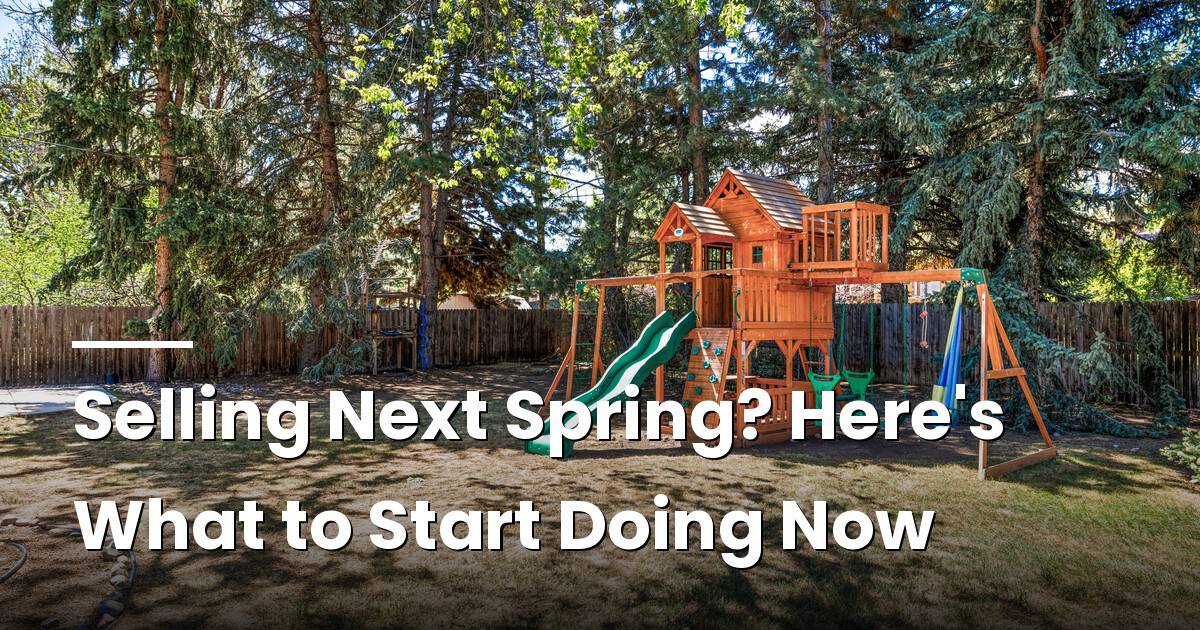
And get those exterior photos taken. Your lawn won't look like this nice, and might even be covered with snow in March, so knock this out now!
And lastly, start interviewing agents and reviewing comps for your neighborhood, whether that's Park Hill, Congress Park, City Park, or anywhere else across the Front Range. Pricing strategy takes real research, and it's worth having that conversation before you're under any deadline.
Once the holidays pass, shift into the tasks tied more directly to your listing date. Aiming for that April 12 to 18 window means your 8-to-12-week mark lands in mid-January to early February. That's when you finalize any repairs the inspection flagged and settle on a realistic price range based on what's actually selling nearby.
Six to eight weeks out, roughly mid-to-late February, is repair season: fix the sticking door, the flickering light switch, the faucet that's been dripping since 2024. These are the small things that quietly cost you money at inspection if you don't get ahead of them.
Four to six weeks out, into early-to-mid March, is when the house starts feeling ready. Declutter room by room. Deep clean everything, especially kitchens and bathrooms. Steam-clean the carpets, wash the windows, and patch the walls with a neutral coat of paint anywhere it's scuffed or dated. Start pulling back personal photos and oversized furniture so the rooms read bigger.
This is late March if you're targeting mid-April. Book your photographer now, professionally photographed listings sell for $3,400 to $11,200 more on average, so this isn't a place to cut corners. Pull together your paperwork: deed, permits, warranties, HOA documents if you have them.
Then it's fresh flowers, clean towels, and good lighting until the day you go live.
None of this is complicated, but almost all of it is easier with lead time you don't have if you wait until February to start. If you're even loosely thinking about a spring move, let's talk now, while there's zero pressure and plenty of runway to do this right. I'd rather help you hit that April window prepared than watch you scramble to catch up to it.
 You found the house. It checks the boxes, it's priced right, and if you wait another two weeks to list your current place first, someone else is going to get it. But your equity is tied up in a home that hasn't sold yet. This is exactly the gap a bridge loan is built for.
I get asked about these more than almost any other financing tool, usually from clients who are torn between buying and selling at the same time. So here's what a bridge loan actually is, how the numbers work, and when I'd tell you to use one versus when I'd steer you toward something else.
A bridge loan is short-term financing that lets you borrow against the equity in your current home to cover the down payment and closing costs on your next one, before your current home sells. Your existing home acts as collateral. Once it sells, you pay off the bridge loan with the proceeds.
The appeal is simple: it lets you make a strong, non-contingent offer on a new house without waiting for your old one to close first.
Most bridge loans run 3 to 12 months, though some lenders will stretch a term out further. To qualify, you'll generally need:
That last point trips people up. Lenders want to see that you could theoretically carry three payments simultaneously, even though the whole point is that you won't for long.
Payment structure varies by lender. Some let you make interest-only payments while you're carrying the loan. Others defer everything until your old home sells, which is easier on your monthly cash flow but means a larger payoff at closing.
This is the part people underestimate. Bridge loans are priced meaningfully higher than a standard mortgage, typically 1 to 3 percentage points above prevailing mortgage rates, with closing costs running 1.5 to 3 percent of the loan amount for origination, underwriting, appraisal, and title fees.
Run the numbers on a real example: a $350,000 bridge loan can total roughly $381,250 by the time you repay it six months later, once interest and fees are factored in. That's not a reason to avoid one. It's a reason to go in with your eyes open about what “fast and flexible” actually costs.
Beyond the equity and credit thresholds above, most lenders also want your current home actively listed for sale before they'll approve a bridge loan. In Colorado, you'll typically find these through your existing mortgage lender first, then local banks, credit unions, or non-QM and hard-money lenders if your file doesn't fit a conventional box. Not every lender offers them, so this is a good early call to make, not a last-minute one.
A bridge loan isn't the only way to solve the buy-before-you-sell problem, and it's not always the cheapest one.
A HELOC, or home equity line of credit, on your current home typically carries a lower rate and more flexible repayment than a true bridge loan, if you have the equity and the timeline to set one up in advance. A home equity loan gives you a fixed rate and a predictable payment instead. And “buy before you sell” programs, now offered by a handful of companies operating in Colorado, let you unlock your current equity up front without taking on a traditional bridge loan at all. Worth a conversation if the fees above give you pause.
Then there's the simplest option: a contingent offer. In a market where inventory is loosening up in parts of Park Hill, Congress Park, and City Park, a well-written contingency isn't automatically a dealbreaker for a seller the way it might have been a couple of years ago. It's worth pricing out against the cost of a bridge loan before you assume you need one.
Honestly, less often than people expect. A bridge loan earns its cost when you've found a home you don't want to risk losing, your current home is realistically going to sell fast once it's listed, and you have the equity and income to qualify comfortably, not just barely.
I, personally, did a HELOC to help fund my home purchase. The trick is that you can't list your old home for sale until after the HELOC closes, so you've got to have your ducks in a row to avoid having the loan open longer than necessary.
Reach out, and we'll run your specific numbers before you're standing in front of an offer deadline trying to figure it out.
 Stanley Marketplace hit its 10th anniversary this year, and there’s more going on there than just cake. A long-running creek restoration project just wrapped up new trails right outside its doors, and the property itself is under new ownership. If you live near Stanley or send friends there regularly, here’s what’s actually changed.
Stanley opened in 2016 inside a building with a much different original purpose. Stanley Aviation started as a 75,000-square-foot manufacturing facility in 1954 and expanded to 140,000 square feet within a few years, producing aerospace components before the site eventually sat vacant. What’s there now is a food-and-retail hub with more than 50 locally owned businesses — restaurants, shops, fitness studios, creative spaces, and family activities under one roof.
The bigger physical change is Westerly Creek. Crews relocated an industrial canal about 1,000 feet west of Stanley and rebuilt it as a meandering natural creek, running from Montview Boulevard to 26th Avenue. The $14 million project — funded by the City of Aurora, Mile High Flood District, Adams County’s open space sales tax, and Stanley itself — added:
•Walking and biking trails alongside the water
•A water filtration pond with native grasses and plants
•Two new pedestrian and cyclist bridges
•About 75 additional parking spaces
•A turf area built for movies, concerts, and sports events
Construction took more than a year, with the work closest to Stanley substantially finished by Memorial Day and irrigation and pond work near Montview continuing through the summer. Crews hit a few surprises along the way — old debris and contamination from the site’s aviation and ejection-seat-testing history, along with concrete foundation blocks nobody expected to find. Stanley’s general manager, Jonathan Alpert, framed the finished project as room to grow: “We’ll continue to expand outdoor recreation activities that complement the marketplace.”
Stanley Marketplace sits at 2501 Dallas Street in Aurora, right along the Denver-Aurora line near Denver’s Central Park neighborhood — close enough that it functions as a de facto amenity for Park Hill, Central Park, and Lowry residents even though it’s technically across the city border. That cross-boundary location is part of why the Westerly Creek project matters beyond Aurora: the new trail connects into a broader network that Denver residents already use to get around on foot or by bike.
None of this changes what makes Stanley worth a visit today — the new trail along Westerly Creek is genuinely a nice addition if you’re already in the neighborhood for lunch or a Saturday event. But if you’re weighing a home near Stanley Marketplace specifically because of what it brings to the area, it’s worth knowing that ownership is in transition.
 City Park is one of the neighborhoods I show the most, and it’s easy to see why once you’ve walked it. You get a 330-acre park with two lakes, a zoo, and a science museum, wrapped in Denver Square homes that have been there since before the park was finished. If you’re weighing whether this is the right fit, here’s what you actually need to know.
City Park, bounded by York Street to the west, Colorado Boulevard to the east, 23rd Avenue to the north, and 17th Avenue to the south. It sits roughly three miles from downtown, with East High School as the neighborhood’s landmark and its only school.
Construction on City Park began in 1886, and it’s been Denver’s largest park ever since. It's 330 acres and has been listed on the National Register of Historic Places since 1986. What you’ll actually use:
•Ferril Lake and Duck Lake, both with boat rentals
•The Denver Zoo and the Denver Museum of Nature and Science, both inside the park boundaries
•City Park Golf Course, just north of the park proper
•Three miles of trails, tennis courts, and a free summer concert series
•A Saturday farmers market that runs May through October
I’ve had clients pick this neighborhood specifically because they wanted to walk to the zoo with their kids on a random Tuesday. That’s a real reason to live somewhere.
This is Denver Square territory — Craftsman bungalows, Tudors, and brick foursquares dating to the late 1800s and early 1900s, many of them original to the neighborhood’s earliest development. A few numbers to anchor your expectations:
•Single-family homes generally run $700,000 to $1.3 million
•Condos and townhomes span a wider range, roughly $200,000 to $1.5 million for luxury units with skyline views
•Average home value sits around $827,600, at about $501 per square foot
•5280 clocked the 2025 average sale price at $913,765 — up 23% and enough to move City Park to #5 on their 2026 best-neighborhoods ranking, a 29-spot jump from the year before
If you want a century-old brick foursquare with the bones to prove it, or a newer condo at a building like The Pinnacle at City Park South with mountain views, this neighborhood has both ends of that range.
City Park scores 70 out of 100 for walkability and 80 for bikeability, with decent bus access along Colfax, 17th Street, and Colorado Boulevard. It’s a neighborhood where you can genuinely leave the car at home for errands, even if downtown itself is still a short drive or bike ride away.
A few names worth knowing before you move in: Bastien’s has been serving chophouse steaks since 1958, Denver Biscuit Co. draws a line for its fried chicken biscuit sandwiches, and Molotov Kitschen + Cocktails does Eastern European-inspired plates with a cocktail list to match. For something lower-key, the Weathervane Cafe operates out of a historic carriage house, and Chivis Tacos covers the taqueria end of things well.
City Park tends to suit people who want walkable, tree-lined, and a little bit grand without leaving the city — the median household income here runs close to $93,000, and college graduates make up nearly 79% of residents, well above the national average. It’s not the neighborhood for someone chasing a brand-new build or a dozen school options; East High is it. But if what you want is a historic house near a real park, not just a pocket green space, this is one of the few Denver neighborhoods that delivers exactly that.
 Denver Public Schools voters will decide on a $44 million mill levy override this November. The DPS Board of Education voted unanimously on August 14 to put the measure on the November 3 ballot, and if you own a home in Denver, it’s worth understanding what you’d actually be voting on and what it would cost you.
If the term is unfamiliar, a mill levy override is a request to raise property taxes above the district’s standard rate, earmarked for a specific set of uses and requiring voter approval under Colorado’s TABOR law. It’s different from a bond, which districts use to borrow for buildings and major construction and pay back over years. This measure is the override version, which means it's recurring revenue for operating costs, not a one-time construction fund.
DPS has been explicit that this money is meant to stay in the classroom rather than go toward construction. The $44 million breaks down roughly like this:
•$25.8 million for staff raises — $1,750 per full-time employee
•$9.3 million for district charter school funding, which is state-mandated
•$4 million for career and technical education programming, equipment, and transportation
•$2.9 million to expand student mental health support
•$2 million for special education services
DPS estimates the override would add about $71 to $72 a year in property taxes for the average Denver home, valued around $624,800 — roughly $6 a month. That’s the number to have in mind heading into November, separate from whatever else is on your ballot that year.
DPS hasn’t gone back to voters for a mill levy override since 2020, when a $32 million measure passed to help fund raises, counseling, and special education staff. Since then, the district has been dealing with declining enrollment and rising healthcare and utility costs, even as it serves roughly 89,000 students on a $1.5 billion budget. Interim Deputy Superintendent Chuck Carpenter connected the dots on how enrollment ties to funding: “It’s about $525 per kid, and so if the enrollment grows, that would grow.”
Retention has been part of the pitch too. Thomas Jefferson High School teacher Amber Wilson put it plainly: “DPS can recruit talented educators. The problem is retaining them.” Special education teacher Erica Atchison framed it in similar terms: “Teachers deserve a living wage. We deserve to live in the area that we serve in.”
This wasn’t a decision the board made in isolation. DPS ran a Mill Levy Override Advisory Committee made up of community volunteers, alongside six regional community meetings held between late April and mid-May, to gather input before recommending whether to move forward. The committee presented its recommendation to the board in June, and the board’s August vote followed from that process.
Students weighed in too. Abraham Lincoln High School student Joshua Cardenas made the case from the classroom side: “When students have the support they need, they have a better chance to learn, participate, and thrive.”
A roughly $6-a-month increase is a small line item next to everything else on a Denver property tax bill, but it’s still worth knowing what you’re saying yes or no to — and why the district is asking now rather than waiting. If you’re weighing a home purchase in a DPS boundary this fall, this is one more thing that could show up as a small increase on next year’s tax bill, not something that should change your decision on its own, but worth having in your back pocket when you’re budgeting.
Colorado runs elections by mail, so ballots will land in mailboxes in mid-October ahead of the November 3 date — plenty of time to read the fine print yourself rather than rely on any single summary, mine included.
I’ll follow this one as it gets closer to November and update if anything changes before ballots go out.
 If you’ve gotten a parking ticket in Denver over the past year and thought “I’ll just deal with this online,” you’ve probably already discovered that option disappeared. Good news: starting Monday, September 14, it’s back. The city is relaunching its online parking ticket dispute system at denvergov.org/parking, and it’s worth knowing how it works before you need it.
Denver County Court eliminated its online dispute system in September 2025, when the parking magistrates who reviewed those cases were laid off as part of city budget cuts. That left one option for anyone who wanted to fight a ticket: show up in person at the City and County Building and wait for a hearing.
Predictably, most people didn’t bother. The share of drivers disputing tickets dropped from 12% to just 1%, and hearings that were once routine became a genuine ordeal to get — 269 were scheduled in April 2026, compared to just 5 in April 2025. Denver resident Farnoosh Seif became one of the more visible examples of why that mattered: after surgery, she couldn’t get to the building in person to contest a $35 ticket. “I can’t even leave my house right now,” she told Denver7, and pointed out that the process assumed everyone disputing a ticket could simply take a day off work. DOTI’s communications director, Nancy Kuhn, acknowledged the gap, citing the convenience of the online dispute system as the reason for bringing it back.
Starting September 14, the Denver Department of Transportation and Infrastructure — not the county court — will review disputes filed online, rather than the parking magistrates who handled it before. A few specifics worth knowing:
•Citations have to be within 20 days of issuance to qualify for the online process. Anything issued before August 25 still has to go through the in-person route at the City and County Building.
•If you’re not satisfied with how DOTI resolves your online dispute, you can still request an in-person hearing afterward.
•You’ll file directly at denvergov.org/parking rather than through the county court’s site — worth bookmarking now if you park in the city regularly.
Denver’s also rolling out a related tweak: a third hour of metered parking after 3 p.m. in downtown, the Broadway corridor, and LoHi, priced at $3 and available in eight-minute increments through meters and the pay-by-phone app. It follows a pilot in Governor’s Park where about 20% of parkers opted to pay for the extra hour rather than move their car or risk a ticket — a decent signal that people would rather pay a little more for certainty.
This process only covers citations issued by the City and County of Denver — the orange tickets you get for expired meters, street sweeping, or a lapsed residential permit. If your ticket came from a private lot or your apartment or HOA’s property manager, this system doesn’t apply at all; those disputes go through whoever manages the lot, not DOTI or the county. Worth checking which kind you’re holding before you go looking for it on denvergov.org.
If you’re currently sitting on a ticket from earlier this summer, check the date before September 14 gets here. If it was issued before August 25, you’re already outside the online window and will need to handle it in person regardless of when you get around to it — so there’s no upside to waiting. If it’s more recent, hold off filing until the 14th so you can use the online process instead of driving downtown.
None of this changes how careful you need to be about where you park in the first place. But it does change what happens after the fact, and after a year of Denver drivers having no good options, that’s a real improvement.










Socials