
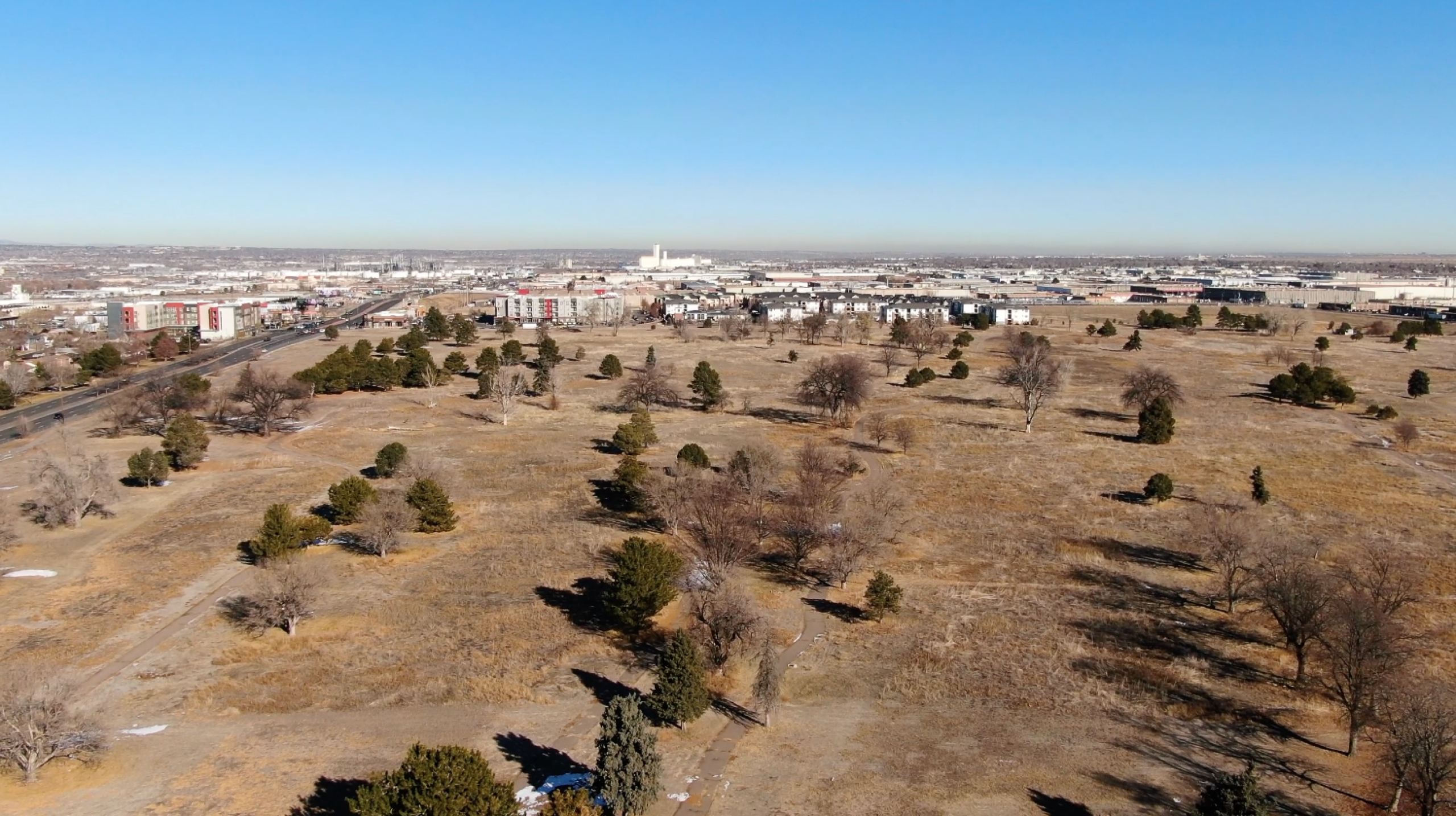
 A retired Denver firefighter's backyard fence is the only thing standing between his yard and Park Hill Park, the old golf course the city bought last year. This summer, he's been watching knee-high, dead weeds spread across acres of it, right up to the fence line, and wondering why the city isn't watering the land the way it waters City Park.
He's not the only one worried. Anyone whose home borders that dry, overgrown land is looking at the same thing: a fire risk sitting right next door.
Here's the backdrop. The city bought the 155-acre former golf course in a land swap and has big plans to turn it into a regional park, with trails, playgrounds, and sports fields. But that plan is still years away. Right now, the property's irrigation system barely works, and mowing has been spotty at best. Weeds have grown tall and dry, right up to the fence line, with homes just on the other side. The public can still walk in through one gate from sunrise to sunset, but the paths are crumbling leftovers from the golf course days.
This isn't just a made-up worry, either. A fire already burned five acres of the site back in September 2024. The Denver Fire Department is ready and able to respond, but neighbors still see real risk in leaving that much dry, uncontrolled vegetation sitting so close to their homes.
Denver's parks department confirms the problem. Most of the site's irrigation system has been damaged for years by vandalism and neglect, long before the city even took over the land. Right now, crews are only watering a handful of trees on the property. In response to growing complaints from nearby residents, the city says it will start mowing the site more thoroughly through the end of summer, though it hasn't given an exact date.
It's worth noting that overgrown weeds actually burn faster and hotter than native prairie grass would. So beyond just looking rough, this specific kind of vegetation adds real risk. The longer-term fix means fully working irrigation and regular upkeep, but that's tied to $74 million in bond money voters approved last year. Most of that money is set aside for the park's future design and construction, not for fixing what's growing right now. Some neighbors guess a finished park is still years off, maybe as late as 2030. The city hasn't even hired a design firm yet, so real construction is still a long way out.
If you own a home near Park Hill Park, or really anywhere in Denver next to open space, this is a good reminder that wildfire risk isn't just a mountain-town problem anymore. Dry, hot summers are turning overgrown city lots into something homeowners need to think about too, especially when it comes to insurance rates and how close your property line sits to unmanaged land. It's the kind of detail worth asking about before you buy near any open space in Denver, not just Park Hill.
If you're near this stretch of Park Hill and wondering what it might mean for your homeowners insurance or your home's value, I'm happy to talk it through.


%20copy.jpeg)










Socials